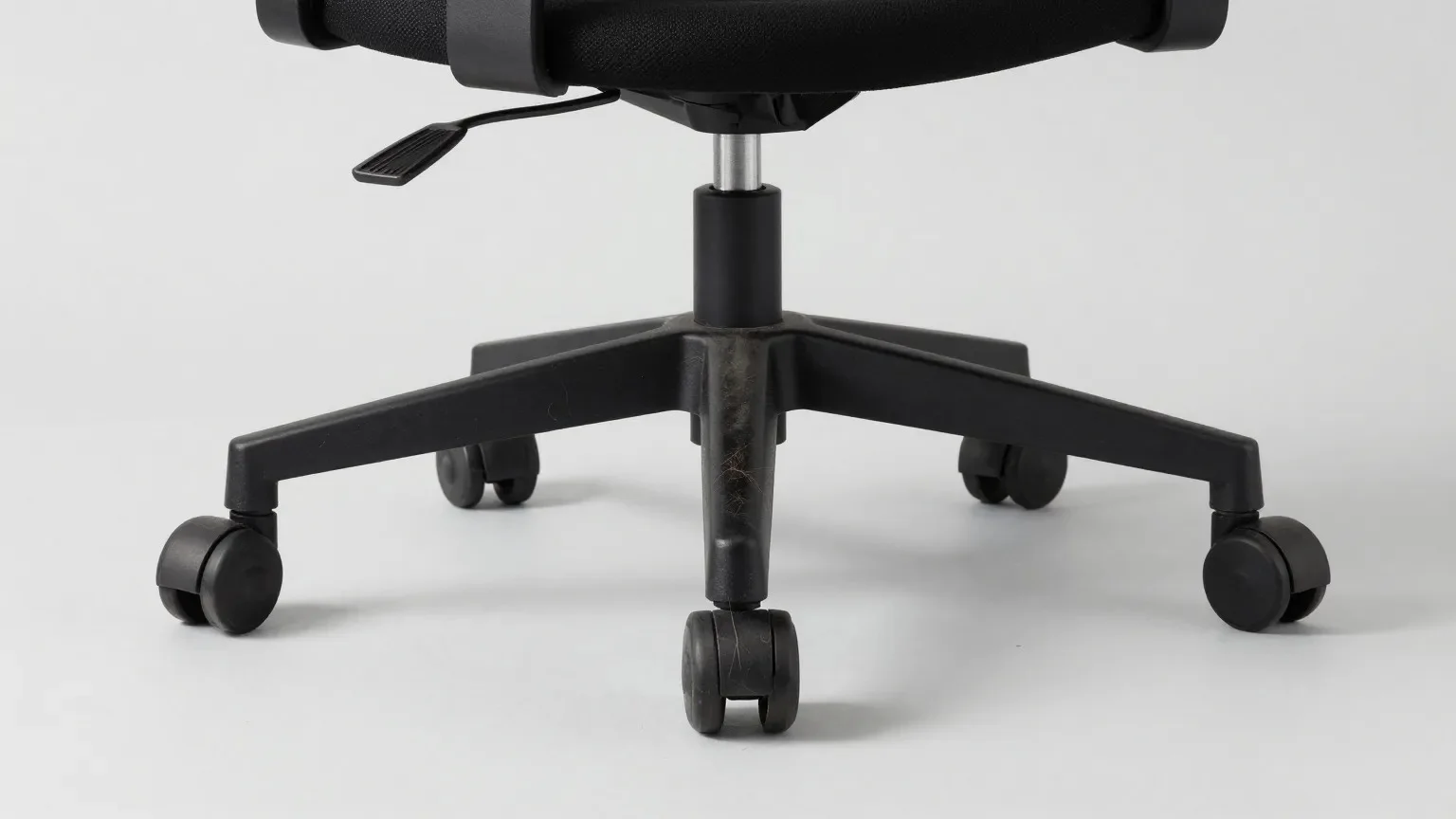
That Slow, Dragging Feeling — When Your Office Chair Won't Move Properly
You push back from your desk and nothing happens. Or worse — the chair lurches sideways, catches on the carpet, and nearly tips you over. It's one of those daily frustrations that most office workers just put up with, not realising how quickly and affordably it can be fixed. If your office chair wheels (castors) aren't rolling the way they should, you're not alone — and you don't need a new chair.
In KwaZulu-Natal workplaces, from busy open-plan offices in Durban's CBD to home offices in Hillcrest and Umhlanga, stuck or worn-out castors are one of the most common chair complaints Wayne Waldeck gets called out to fix. The good news? Most castor problems are solved in under an hour — without needing to replace the whole chair.
Why Office Chair Castors Stop Rolling Properly
Before diving into fixes, it helps to understand what's actually going wrong. Office chair castors fail for a few different reasons, and knowing the cause determines whether a clean or a swap is the right call.
- Hair and thread build-up: This is the number one culprit. Over time, hair (human and pet), carpet fibres, and thread wrap around the castor axle until the wheel literally can't spin anymore. You'll notice the chair skidding or leaving black marks on hard floors.
- Worn or cracked wheels: Cheaper plastic castors degrade with UV exposure and constant weight-bearing. The wheels develop flat spots, crack, or chip — and no amount of cleaning will fix a physically broken castor.
- Corroded or seized bearings: In coastal areas like Durban and Ballito, salt air accelerates corrosion. The internal bearing of the castor rusts and seizes, making the wheel spin with resistance or not at all.
- Wrong castor type for the floor: Hard plastic castors on hard flooring (tiles, laminate) roll aggressively and scratch your floor. Soft rubber castors on deep carpet barely move. Mismatched castor-floor combinations make chairs feel heavy and difficult to manoeuvre.
The fix depends entirely on which of these problems you're dealing with — which is exactly why a proper inspection matters before throwing money at new castors unnecessarily.
Can You Clean Your Castors or Do They Need Replacing?
If the problem is hair and debris build-up, cleaning often brings the wheels back to life completely. You'll need a small pair of scissors or a seam ripper, a flat-head screwdriver, and a bit of patience. Pull the castor out of the chair base (they usually pull straight down), and carefully cut and pull all the wound-up material off the axle. In many cases, the wheel will spin freely again once cleared.
However, if the wheel itself is cracked, flat-spotted, or if the bearing is corroded, cleaning won't help. You need a replacement. The good news about office chair castors replacement is that castors are standardised — the vast majority of office chairs use a 11mm or 10mm stem diameter castor, which means quality replacements are readily available and usually far cheaper than people expect.
Wayne carries a range of replacement castors specifically suited to both hard floor and carpeted office environments in KwaZulu-Natal. He can assess on-site whether cleaning or full replacement is the right call — saving you the cost of parts you might not need.
Types of Replacement Castors: Knowing What You're Getting
Not all castors are equal, and getting the right type makes a significant difference to how your chair feels and performs. Here's a quick breakdown of what's out there:
- Standard plastic castors: The factory-fitted option on most budget-to-mid-range chairs. Fine for carpet, but scratch hard floors easily. Usually the first to fail.
- Rollerblade-style castors (twin-wheel, polyurethane): The upgrade that most chair owners never knew existed. These have a soft, rubberised outer wheel that rolls quietly on hard floors without scratching, while still working well on carpet. They're also noticeably smoother and quieter. This is what Wayne typically recommends for chair wheel repair in KwaZulu-Natal offices that have a mix of tiled and carpeted zones.
- Locking castors: Have a brake mechanism so the chair stays put when you want it to. Useful for reception desks or anywhere staff need a stationary seated position.
- Heavy-duty castors: Rated for higher weight capacities — essential if the existing castors are deforming under load, which is a common issue in chairs used by larger individuals.
Fitting the right castor type to your specific floor and usage pattern is something Wayne talks through with every client — it's a small detail that makes a big difference over the life of the chair.
What About Hard Floors? The Castor-Scratching Problem
A lot of Durban and PMB office spaces have moved to polished concrete, porcelain tiles, or laminate flooring — all of which suffer badly from hard plastic castors. If you're finding black scuff marks or surface scratches under your chairs, the castors are almost certainly the cause.
Switching to soft polyurethane (PU) castors is the fix, and it's one of the most satisfying upgrades a chair can get. The difference in rolling feel is immediate — glide instead of grind. And your floor stays in good shape, which matters whether you're renting a commercial space or protecting your own investment.
This is particularly relevant for KZN home offices, where people are often rolling a good office chair over expensive flooring. A set of quality replacement castors costs a fraction of what floor repair or chair replacement would set you back.
When to Call a Professional for Office Chair Castor Replacement
Most single-chair castor swaps are a simple DIY job if you're comfortable pulling the old ones out and pressing the new ones in. But there are situations where calling Wayne makes more sense:
- You have multiple chairs in an office and want them all done at once efficiently
- You're not sure what castor type to order, and you don't want to buy the wrong spec
- The castor stem is damaged or stuck inside the base and won't pull out
- You want the job done while the chair is in the office without disrupting staff workflow
Wayne comes to you anywhere in KwaZulu-Natal — he assesses the chair, sources the right replacement castors, fits them on-site, and has the chair rolling properly before he leaves. For offices with a fleet of chairs, he can work through them methodically, fitting and testing each one.
It's one of those jobs that sounds simple but has enough variables (stem diameter, stem length, floor type, weight rating) that having someone experienced handle it means you get the result right the first time.
Don't Let a Small Problem Drain Your Productivity
It sounds dramatic, but a chair that drags, wobbles, or won't roll freely has a real effect on how you feel at your desk. You shift awkwardly, you strain to move yourself, and you unconsciously brace instead of sitting properly. That compounds posture fatigue over a working day.
A fresh set of properly matched castors is one of the lowest-cost, highest-impact upgrades you can make to a chair that's otherwise in good condition. It extends the life of the chair, protects your floor, and makes a genuine difference to how comfortable and effortless your working day feels.
Ready to get your chair sorted? WhatsApp Wayne on 066 243 4867 or call 066 243 4867 — he comes to your office anywhere in KwaZulu-Natal.